Class Hours: 10:05 – 2:40
Mr. Bohmann | wbohmann@ewsd.org
10:05 Today’s Notes & Attendance
- Check-in from Monday
- Memorial Day is next Monday – no School
- Final Project will be introduced on Wednesday
- Green Mountain Bus Survey -fill out if you ever take public transit
- Thursday is the Hornet Hullabaloo – Essex students welcome to participate
- Game Presentation today after Lunch – Publishing…
10:10 Dissecting your Favorite Video Game
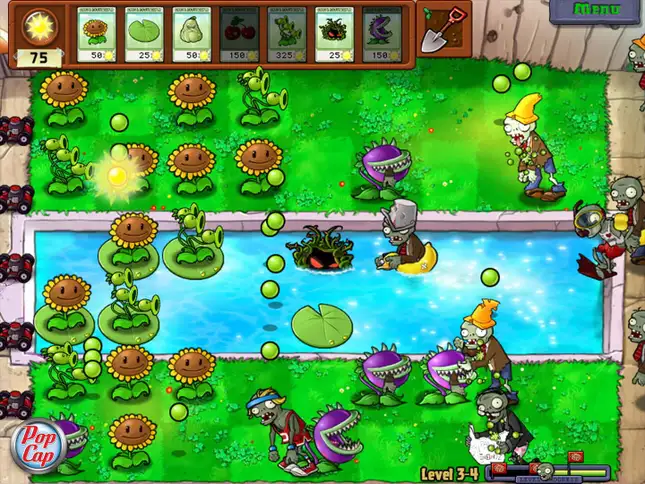
What Makes a Good Video Game?
Game and Level Design
When you are ready to write your own game, coming up with a great idea is only the first step. A full development cycle involves careful planning, design, coding, and testing. Before you write the first line of code, you should go through the requirements and design steps to figure out what you are going to create and how the game will be written.
We will talk more about the development cycle this week.
Level Designers vs Environmental Artists
A level is a space where a game happens. Think quickly of some of the games you play and think about the space the level is set in and the complexity of the layout.
Level design is the practice of planning and building spaces for video games. Some of you are really interested in level design, asset creation, texturing, lighting and sound.
Have you ever thought about what a Level Designer’s job is… Level Designers
- Sketch Level Blueprints or storyboards
- Coordinate the placement of obstacles, enemies, bosses, challenges, choke points
- Decide where to trigger certain events
- Provide visual cues or auditory clues as guidance for the player
- Use game mechanics to immerse the player
An Environmental Artist will:
- Design a consistent visual theme to the level (so everything looks consistent)
- Provides visual cues for guidance (leading lines, different colored stones, paths walk ways, key objective in background
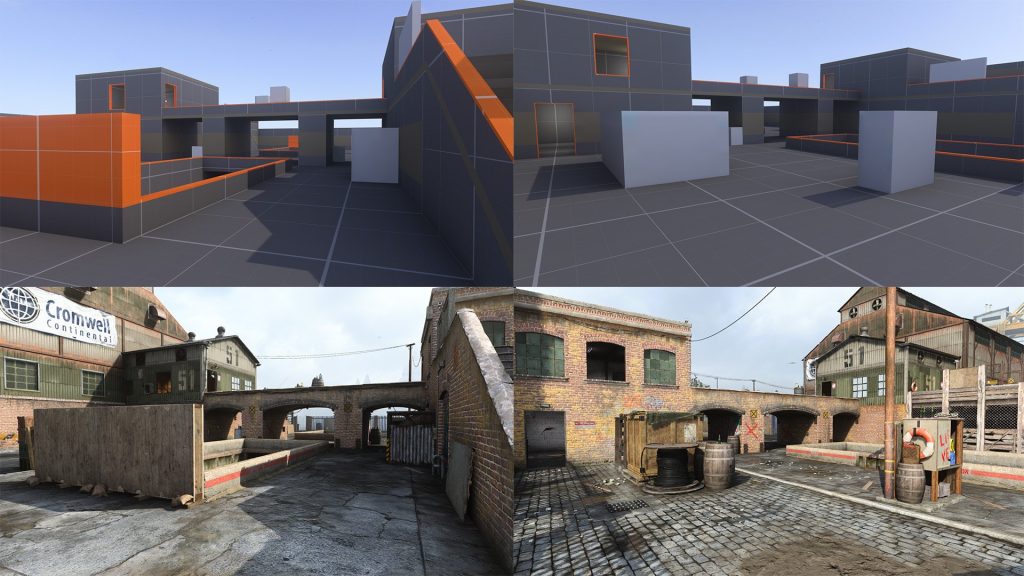
Level design has a big impact on game play.
A blockout is a playable rough draft of a game level, built with simple blocky 3D shapes in low detail.
Prototyping the basic structure of a level is done so we can playtest it within the game engine – in this case Unity or Unreal. Playtesting helps us decide whether the level is too small or too big, confusing or entertaining, balanced or broken, etc.
This playtesting is important for any game, or anything where rearranging a room can cause big changes in player behavior. If you realize a room design isn’t working, then you can modify it more easily when it is made of simple shapes. Texturing and materials can be managed later. We can tell if a game is a lot of fun or has high engagement with simple prototypes.
What makes for a good game and level design should be considered before final art renders
What Makes for good level design (and player experience)
- Design your game around a core mechanic
| Interface Mechanics | Game Play Mechanics | Win / Goal Mechanics |
|---|---|---|
| Key movements | Quests | Capturing pieces |
| Overlays & Maps (mini maps) | Taking Turns / Turn Based | Finishing First |
| 2D movement | Level Progression | High Score |
| Looting | Elimination Player v Player | |
| Bosses | Puzzle Solving | |
| Health | Story Completion | |
| Managing Resources | Team Win | |
| Movement |
2. Make your games easier at the start and increasingly more difficult
If a game is too hard at the start, then it is likely you won’t keep going. You want your players to begin playing as soons as possible and ensure that gameplay gets progressively more difficult. During level design, constantly ramping up the difficulty as players get more experience is crucial to building a game that players want to finish.
3. Create Options & Different Views (change up the scenery & Balanced gameplay)
You want to give players options throughout their gameplay. Think Mario Kart. You have the option to stick to the main course, which is longer but easier to maneuver or there are shortcuts which might be more difficult but perhaps you can get coins, power ups or new adventures (original super mario you could stay on main level, jump into the sky or go down the pipes)
Besides different and interesting routes, you can allow your character to customize using equipment (different gear provides different protection vs weight vs speed)
4. Feedback and Rewards
Regular rewards give mini boosts of accomplishment and allow the player to track their progress and reach for goals. Checkpoints can serve as a simple reward. Coins, inventory, power ups, experience can all have a huge impact on player engagement.
5. Meaningful Core Mission
Donkey Kong – my first real arcade game required the player to run, jump on platforms, climb ladders, dodge barrels and rescue Pauline from Donkey Kong.
Whatever you choose to make the player’s core mission, make sure it’s something that players will want to see through.
121 Level Design & Game Environment Ideas
Assignment: Dissect Your Favorite Game
Due Tuesday, May 26th
This is a pretty easy assignment. You’ll need to select a game you like to play and then spend some time playing the game. Look at the details of the levels you are playing and consider the 5 core principles of good level design from the list above.
Create a document, slide deck, website (jk) and break down your game to show how the game you chose does a good (or not so good) job of using the five principles of good game design.
Screenshots, good descriptions and a quality examples will ensure you get a good grade for this assignment. A bulleted list with very little explanation will not earn a good grade. I want you to spend some time thinking about your game and demonstrating how these principles are used and show us!
10:50 Morning Break (10 minutes)

11:00 Climate Survey & GMetrix Practice Round
YouthTruth Student Survey
The YouthTruth Student Survey is a national nonprofit survey project that harnesses anonymous, actionable student feedback to help K-12 school leaders improve school culture, instruction, and student support. It focuses on student perceptions—such as belonging, engagement, and teacher relationships—which are directly linked to academic outcomes.
Here is what I have to read before we begin:
Today is a very special opportunity for you to make your voice heard about your experiences here at school. The YouthTruth Student Survey is your chance to be part of improving our school.
Please remember that there are no right or wrong answers to the questions. If you write any comments, please don’t include your name or anything else that might identify you. Your responses are private and they will be combined with the responses of other students in a report that is sent to our school’s leaders. School leaders won’t know who said what so please take your time and answer honestly. Your feedback is very important to us.
If you have any questions, please raise your hand and I will assist you. Thanks for sharing your experiences.
GMETRIX
When you finish the survey, login to GMetrix and take the Practice Test for Certified Artist (not the teacher one). Show me your final score at the end – it’s practice! Look up answers you do not know. It is not a race. When you finish, work on past due work or begin work on Favorite Video Game Assignment.

11:55 Lunch

12:30 Space Sentry Presentation – Final Product Showcase
Team Share of your video game. A representative will share the story of the team. We’ll do this in GAWD1
- Process
- Successes
- Challenges
- Organizational Strategies
- Game Overview
- Sample Gameplay (in the form of a video Trailer)
- and….. We will see and play your game – on one of your computers for from Unity Play!
1:10 Afternoon Break
1:25 Speed Design

1:45 Independent Production & Guided Support
2:10 Dailies

2:15 Independent Reading

2:40 Dismissal