Class Hours: 10:05 – 2:40
Mr. Bohmann | wbohmann@ewsd.org
10:05 Today’s Notes & Attendance
- Week 18 and Quarter 3
- Burlington Visitors coming Thursday
10:10 Ball Animation – Review from Yesterday
We use a control to keep and control the ball’s volume and manage deformation and movement
The graph editor allows for fine tune adjustments
We set keyframes using “i” however it add keys to location, rotation and scale. Use ‘k’ if you want to only add keyframes to specific parts of the transform
10:40 Careers in Animation

Careers in the Animation Field – so many!
There are a lot of careers in the field of Animation. Here’s a list of some.
More artistic jobs:
Concept artist
Storyboard artist
Pre-visualization (previz) artist
Modeling artist
Texturing artist
Character animator
Creature animator
Technical animator
Matte painting artist
Lighting artist (sometimes seen as more technical)
Rotoscope artist
More technical jobs:
Rigging Technical Director (TD)Fx TD
Shading TD
Pipeline TD
Compositor
Colorist
Crowd TD
Cloth TD
Layout TD
Rendering TD
Scanning TD
Systems Administrator
Head of Tools (R & D)
Supervisor Jobs:
Director
Assistant Director
Producer
Production Designer
Animation Director
Visual Effects Supervisor
CG Supervisor
Director of Photography
Editor
Assignment
Investigate one Artistic Job and one Technical Job and one Supervisor Job
(TD stands for technical director).
Select ones that look interesting to you, read about them and do a little research.
To earn an A for this assignment, do your homework. Your words, more than cut and paste. Assignment is in Google Classroom. Investigate, learn, share.
BTW – I used ChatGPT to look up a job. It is so easy to cut and paste and not really read the results. Be sure you answer thoroughly the questions on the worksheet. I want to know what you think, I’m not interested in what the AI thinks.
Animation Career Review, Glassdoor, Indeed, Bureau of Labor Statistics
10:50 Morning Break (10 minutes)

11:00 Game Testing in GAWD1

Today we are going to be giving public feedback to the GAWD1 students about the games they are making. They will evaluate your feedback and that feedback will assist each game team on decisions about how to improve their game. Mr. Cronin will go over the details with us around break time.
When giving feedback, be specific.
11:35 Lunch

12:05 A little history… of Animation
Persistence of Vision
Animation or the illusion of movement is a creative form that goes back nearly 150 years. The first know animator was French, Emile Reynaud. Emile Reynaud created a projector for moving images. People paid admission to see these early animations.
Early animation devices were more optical illusions than anything else. Interesting names like zoetrope, fantascope and thaumatrope to name a few. Most of the devices worked by moving an image around in a circle at moderate speeds with light.
Vocabulary:
Persistence of Vision – or the way our eyes and brains process images is an important part of animation and in filmmaking. Each image we see stays reflected on the retina of our eyes for a microsecond after the image disappears. Our brains are very good at filling in the gaps or the “in-betweens”.
The eye stops perceiving movement of frames at about 12 frames per second.
There are a lot of animation devices we can make ourselves with some simple supplies. Before the computer, animators used all kinds of techniques to create the illusion of movement.
A Thaumatrope is an easy illusion of movement device that we can make to illustrate the persistence of vision.
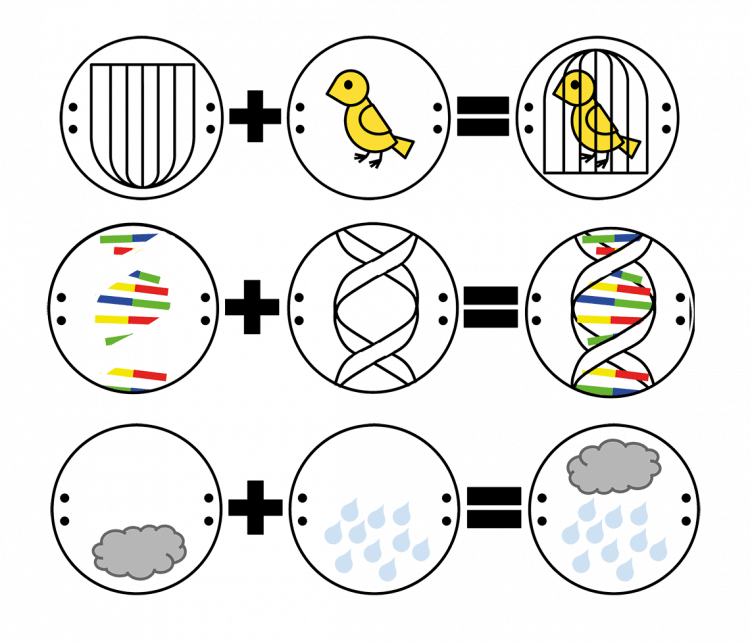
Analog:
Building one is really easy in analog form. First think of an idea. Then…
Paper, Scissors, string, tape
phenakistiscope / flip book / Zoopraxiscope / Zoetrope are some other (early) animation forms
1:00 Afternoon Break
1:15 Dailies

1:20 Reading
1:45 Dismissal